Damn.
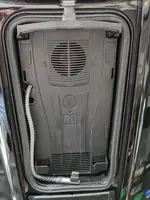
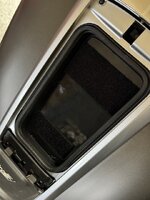
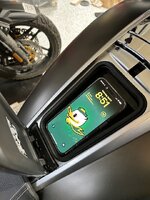
I was hoping for a different outcome. At least you know your solution isn't the correct approach. Is it possible that maybe a "floating" wireless charger, like how the iPhone wireless chargers are magnetic, and know exactly which spot to stick to on the back of the phone, might work?
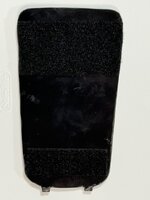
What I mean by that is, make a pocket on the underside of the phone holder where the wireless charger puck can freely move around for your phone size, so that when you go to place your phone in the holder, it can make a solid connection? With power induction, even a little bit off the charger can have a big impact on power transfer - this effect can even be observed in induction cooktops, where shifting cookware off the induction coil prevents the cookware that's off the coil from receiving any "heat". While that's useful for cooking (I do it all the time), it can have a significant effect on power transmission on electrical devices if the transmitter/receiver aren't perfectly aligned.
That's why Apple put the magnet in place with their chargers, whereas Samsung and others did not (at least in older generation chargers). If you don't EXACTLY position your induction coils correctly, your charging won't work as efficiently.
Lastly, there are two different types of induction chargers, the standard type and the fast charger. I don't know which type you installed, but from the sounds of it, I'm presuming it wasn't the fast charger. The difference between the two are merely the wattages between the charging circuits.
This may be a project I'd be willing to take on myself, but I've already committed to drilling holes in my gas fill tube (after I finish a queue of other projects) to increase the capacity of my tank, in a clear show of insanity.
Mike



 .
.