• Welcome to the BMW R18 Forums. Member registration disables ads and allows you to post and share. Register Here.

R18 Louvered Performance Plates

  • <i class="fa--xf fal fa-check "><svg xmlns="http://www.w3.org/2000/svg" role="img" aria-hidden="true" ><use href="/data/local/icons/light.svg?v=1789222567#check"></use></svg></i> Discussion starter Discussion starter Lennstang
  • Start date Start date
. and holes in these plates will allow the bike to fill with spiders and snakes just inches away from your crutch.

yes, you have them most poisonous creatures and no land tortoises 🫣 Not anymore to be more accurate; the first human immigrants ate them. We have no really lethal fauna and twó species of totoise that are too large be sucked in even the úncovered hole.
The label "performance plates" being attached to any aftermarket plate made for this area, I keep wondering if they are in fact making any difference? What I'm getting at, is if the stock covers are a real issue, a vacuum gauge attached to a stock plate would show that there is indeed any restriction, and also whether or not it is corrected by adding a "performance plate"

If and when the dyno testing is done, add that test to the list, if there is a measurable difference, I'll buy a set. (may buy anyway, they at least look cool!)

Greg

I designed and have (had) my son print them.
I tested and reported: Tagged them 'performance plates' because.
Sell for 20€ which I pay him, no benefit for me.
Plus postage: The hassle to post them in this mountain village is all mine.
In fact I am out of pocket because buy the padded envelopes .
TIOLI

One does wonder does one?!

Right better prepare breakfast for the baby tortoise than pearls for the swine 👌
 
All great ideas! Petrus is on to a great idea. There's more than 1 way to get more air into this very restrictive air intake design. You can tell by the way BMW designed the intake snorkels that they were trying to scavenge cooler air from the front of the engine's air vents to the air box. The holes on the top cover of the air box must have been designed to allow more air into the air cleaner when under power because there's no way those snorkels would allow enough air for combustion at higher RPMs.
No one in the aftermarket other than BT Moto and some exhaust companies has really made any performance products for this amazing engine.
I'm going to dyno test at my friend Vinny's shop here in NH. He owns https://vintageperformanceproducts.com/ I'm also going to bring along my engine smoke machine to see how the air is flowing through the airbox while on the dyno. Also to see if the air is being pulled from the performance plates when under load. I already know that they flow air from my testing.
Once I get some good data from the dyno testing at his shop, I may contact BTMoto and schedule a session. Maybe they can create a tune for customers using the performance plates. I'm only an hour and 15 minutes from BT Moto's location in Mass.


I believe the best way to be able to extract more power out of the engine is going to be a more aggressive profile for the cams. Problem is that they are not easy to access like on other bikes. Because this bike hasn't been around very long, no one has invested the time and money into this. But I bet there are big gains to be had. The current cam profile is built around the tough European emissions standards. (it’s Euro 5 compliant). Maybe someone is already working on this?
 
in stock form the harmonicas are
with those removed then the lid on the filter box becomes the limiting factor
with that removed it shifts to the filter element and with that upgraded
thén opening the sides up will add extra air.

It has to be observed though that the filter housing has ludicrously little volume. So whatever we do before has the limit set by the box.

Also BEAR IN MIND and THEN SOME ;) that this is a naturally aspirated engine with two large cylinders gulping for air.This is important to realize because the only 'feed' is atmospheric air pressure. Any restriction = pressure drop = less BMEP -> less powah. It's elementary had Conan Doyle say Holmes.
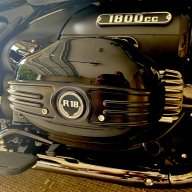
Yep, spot on.
 
I liked the idea of standing off the badge plates; however, I thought of using some sort of filter material sandwiched between the engine cover and the badge plate, just to help keep debri and such out of that space.
For what its worth, I thought (a bit) about this. Like Neolpolar I didn't want half of the Australian countryside - think all that dusty muck, those poisonous snakes, funnel web spiders, savage cassowaries, etc - getting sucked in via my now unfiltered engine plates. While consuming my room temperature Sparkling Ale (its 2 C in my garage at the moment) I came up with three brilliant, imho, risk modifiers: 1. the air intake angle of approach around the plates keeps most of the large scary stuff out; 2. there's only a fairly narrow stand off distance (4-5 mm); and 3. the air still has to go through the air filter.

As per Petrus' original posts the ideal is to remove the black plastic snorkels and air filter housing and just use an aftermarket filter. But like Noelpolar my 2021 Transconnie still as a bit of warranty left to run, and has a free servicing pack with a year and a bit on it (as compensation from BMW for the inconvenience of the reverse gear debacle). The minute they expire I'll go in and play ...
 
For what its worth, I thought (a bit) about this. Like Neolpolar I didn't want half of the Australian countryside - think all that dusty muck, those poisonous snakes, funnel web spiders, savage cassowaries, etc - getting sucked in via my now unfiltered engine plates. While consuming my room temperature Sparkling Ale (its 2 C in my garage at the moment) I came up with three brilliant, imho, risk modifiers: 1. the air intake angle of approach around the plates keeps most of the large scary stuff out; 2. there's only a fairly narrow stand off distance (4-5 mm); and 3. the air still has to go through the air filter.

As per Petrus' original posts the ideal is to remove the black plastic snorkels and air filter housing and just use an aftermarket filter. But like Noelpolar my 2021 Transconnie still as a bit of warranty left to run, and has a free servicing pack with a year and a bit on it (as compensation from BMW for the inconvenience of the reverse gear debacle). The minute they expire I'll go in and play ...
It’s bloody cold in the ACT at this time of the year. Makes Hobart look like a Summer camp 🌏🥶
 
Really looking to a Dyno test by anyone with any type of these plates modified. Does it add Hp, torque or is it simply that the bike runs smoother because there is so much to take in.
 
Last edited:
Really looking to a Dyno test by anyone with any type of these plates modified. Does add Hp, torque or is it simply that the bike runs smoother because there is so much to take in.
Have a play and decide for yourself...... plates off and go for an adventure..... then take the side cases off..... then go the DNA stg2 rinse and repeat.... you can always put the normal filter back etc. When susing things out on the ride pay particular attention to the rev range that means the most to you AND part Throttle etc. For me it is off Idle to 4,500 rpm.... and not wide open all the time.

Fwiw.... on larger twins (so HD etc) most mechnical tuning (cams etc not big bore kits on their own) move the power band to some extent up the rev range, so a 1500 to 4,500 torque band becomes 2,200 to 5,500.... high torque at higher revs gives "headline power" figures.... sometimes at the expense of everyday riding fun for normal owners.

My impression of R18 owners is the vast majority don't live in the 4,000 plus rev range.

I'd be surprised if a "just plates mod" could indicate anything in a statistically valid way on a dyno. But having access to a dyno cheaply (ie a friends) would be a fun exercise.
 
Have a play and decide for yourself...... plates off and go for an adventure..... then take the side cases off..... then go the DNA stg2 rinse and repeat.... you can always put the normal filter back etc. When susing things out on the ride pay particular attention to the rev range that means the most to you AND part Throttle etc. For me it is off Idle to 4,500 rpm.... and not wide open all the time.

Fwiw.... on larger twins (so HD etc) most mechnical tuning (cams etc not big bore kits on their own) move the power band to some extent up the rev range, so a 1500 to 4,500 torque band becomes 2,200 to 5,500.... high torque at higher revs gives "headline power" figures.... sometimes at the expense of everyday riding fun for normal owners.

My impression of R18 owners is the vast majority don't live in the 4,000 plus rev range.

I'd be surprised if a "just plates mod" could indicate anything in a statistically valid way on a dyno. But having access to a dyno cheaply (ie a friends) would be a fun exercise.
At this stage, I’ve only done the air filter and exhaust valve. One felt different, the other sounded different.
 
The obvious (or not so 🫣 ) way:

Take a harmonica wubbah a draw the circumference of the entry side on paper. Calculate the surface. Time 2 = the intake area.
Whatever one does to filter, filter box lid, this is where the air enters through.

Have some fun with none too complicated calculations for the 1802 cc. at several revs.: The volume and air velocity is telling.
Extrapolate to BMEP.

With the electronics of the R18 we are blessed imo: The wideband sensors autotune for us 👌

While you lot ponder over this (or not) I am taking my dog to the local garden center. Me looking for some decorative and edible (by tortoises) plants while he charms the ladies ;)

About Oz wildlife: It is quite an enigma why there are no land tortoises there.
 
Have a play and decide for yourself...... plates off and go for an adventure..... then take the side cases off..... then go the DNA stg2 rinse and repeat.... you can always put the normal filter back etc. When susing things out on the ride pay particular attention to the rev range that means the most to you AND part Throttle etc. For me it is off Idle to 4,500 rpm.... and not wide open all the time.

Fwiw.... on larger twins (so HD etc) most mechnical tuning (cams etc not big bore kits on their own) move the power band to some extent up the rev range, so a 1500 to 4,500 torque band becomes 2,200 to 5,500.... high torque at higher revs gives "headline power" figures.... sometimes at the expense of everyday riding fun for normal owners.

My impression of R18 owners is the vast majority don't live in the 4,000 plus rev range.

I'd be surprised if a "just plates mod" could indicate anything in a statistically valid way on a dyno. But having access to a dyno cheaply (ie a friends) would be a fun exercise.
Great points and I agree, this is a low rpm engine designed for torque, not HP. Harleys have notoriously restrictive cylinder heads. The 117 is much better than in the past. But cams and better heads move the power into the upper RPM ranges. So you do give some here to gain elsewhere.
The R18 already has a great 4 valve cylinder head. Because of the Euro-5 emissions, the cams are very conservative and don't have much overlap. This is an area of opportunity. Cams and the proper tune would really wake up this engine. Until then, we can only do so much. Performance plates are just another way of helping. By allowing more air for combustion. Open up the exhaust a bit and the engine will breathe better. The torque of the R18 is what gives this bike it's personality.
 
The obvious (or not so 🫣 ) way:

Take a harmonica wubbah a draw the circumference of the entry side on paper. Calculate the surface. Time 2 = the intake area.
Whatever one does to filter, filter box lid, this is where the air enters through.

Have some fun with none too complicated calculations for the 1802 cc. at several revs.: The volume and air velocity is telling.
Extrapolate to BMEP.

With the electronics of the R18 we are blessed imo: The wideband sensors autotune for us 👌

While you lot ponder over this (or not) I am taking my dog to the local garden center. Me looking for some decorative and edible (by tortoises) plants while he charms the ladies ;)

About Oz wildlife: It is quite an enigma why there are no land tortoises there.
Yes, engineered to pull air from the front. where the high pressure air from moving down the road helps airflow into this area.
 
…Performance plates are just another way of helping. By allowing more air for combustion. Open up the exhaust a bit and the engine will breathe better. The torque of the R18 is what gives this bike it's personality.
I see the idea of recycling air by allowing hotter air to flow out, mine are open behind the custom side plates for that reason.

However let us not get confused and oversell that opening up the plates will allow more air into the motor. Cooler air maybe, but the engine is not struggling due to lack of air after the DNA stage 2 swap.

As a side note I found a working nascar engineer with some spare time who will build me some custom intake ‘scoops’ to replace the side vents which will to push in tons of cool outside air. More to come.
 
Last edited:
As a side note I found a working nascar engineer with some spare time who will build me some custom intake ‘scoops’ to replace the side vents which will to push in tons of cool outside air. More to come.
If he can somehow get a filter on those it'd be best so bugs and dirt don't end up inside.
 
If he can somehow get a filter on those it'd be best so bugs and dirt don't end up inside.
I could use FrogSkin but it will add to the cost. Bug and mice can easily crawl in the front vent openings also as well as other areas. I've found mice in the strangest places in motorcycles and snowmobiles over the years....
 
Never heard of that but it'd work.

"The Frogzskin Mesh repels water, dirt, dust, etc. while still allowing air to flow freely. This patented technology is displayed in the image to the left. The Frogzskin Mesh is a woven polyester material. It is also hydrophobic, meaning it will repel water and splashes of water."
 
IMG_8343.jpegIMG_8342.jpeg


I forgot how much crap there is blocking the side vents. Also as a +1 to the idea presented by OP @Lennstang, some of the plugs inside on the right side are wrapped in heat protective insulation which should provide notice of how hot that air gets in there. I painted the silver insulation black

Again +1 on providing a way out for the air. This is really a requirement with the DBA air filter stage two as it uses the entire cavity as an airbox. And it’s hot.

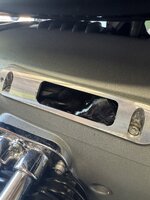
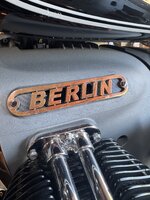
Here is a pic of mine ‘open’ behind BERLIN
 
Last edited:
Here is a pic of mine ‘open’ behind BERLIN

Have a look at the top of the casings. It is where dust and whatnot gets in anyhow.
The dirty the harmonicas where on the OUTside when I deleted them spoke clearly to me: It is an intake.
As I have observed several times; this opening si why the engineers added opening to the filter lid; to make use of the extra intake.

Nicely done btw.
 
Back
Top