
• Welcome to the BMW R18 Forums. Member registration disables ads and allows you to post and share. Register Here.

Valve Behavior

  • <i class="fa--xf fal fa-check "><svg xmlns="http://www.w3.org/2000/svg" role="img" aria-hidden="true" ><use href="/data/local/icons/light.svg?v=1789222567#check"></use></svg></i> Discussion starter Discussion starter BER18 100
  • Start date Start date

BER18 100

Well-known member
Site Supporter
Joined
Feb 24, 2024
Messages
925
Location
Kansas
Visit site
Bike
R18 Anniversary Edition
When valves are adjusted at the 6,000 mile service, are they usually tight and need loosening, or do they tend toward loose and need tightening?

I always did my own valves on the R1200c, but I’m not a professional mechanic and don’t remember.

Reason for asking is my R18 engine noisier now after the 6,000 mile service.
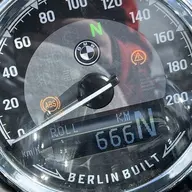
 
my valves were tight at 10000km. I did notice them 'ticking' more but they say "ticky valves are happy valves."

Tech also said to check them every 10k.
 
When valves are adjusted at the 6,000 mile service, are they usually tight and need loosening, or do they tend toward loose and need tightening?

I always did my own valves on the R1200c, but I’m not a professional mechanic and don’t remember.

Reason for asking is my R18 engine noisier now after the 6,000 mile service.

It really depends on where they were set in the factory when the engine was put together ....not all of them are set 100% the same ... IMO .... anything @.02 to .03 mm is fine according to factory specs
 
.... and yes, the R18 has a noisy valve train ... mostly because these are solid cam-followers .... noisy .... but with tappets pointing down in an angle, I see it difficult to engineer hydro tappets... but that is just me ;)

P.S.: I don't mind the clattering :LOL:
 
Prior to 6k service, my R18 was ridiculously quiet. Now very ticky
 
Ticky is way better than silent. I would’nt worry at all, that’s what servicing is for, to keep things in spec.
 
Ticky is way better than silent. I would’nt worry at all, that’s what servicing is for, to keep things in spec.
well.... the clearance is a compromise. The valves should fully seat when hhhhhhót but play means shocl load on the parts in the valve train.
On the R18 all the parts are oversize thus heavy meaning play is best minimal.
The cam profile and cam followeres are therefore designed to take up play in the most gentle way thus ticky may mean a bit too much play.
The profile/followers design allows for the ample 20 - 30 spec range.

As the inlet valves are a bit larger and thermally less stressed I try tight 25 (20-25) inlet and easy 25 (25-30) exhaust.
 
You said it yourself, clearance is a compromise. A silent or very quiet valve train on this sort of set up suggests it needs re-setting to me, or at least checking (by someone who knows what they are doing). Engine temps rocket when stuck in traffic for example, where the air flow is negligible. It’s your engine you do what feels right for you.
 
Engine temps rocket when stuck in traffic for example, where the air flow is negligible.
Well.... no. It is just that you notice it.
When stuck in traffic the engine is at idle no load ot not much more load.
The cylinders stuck out to the side, they always get some cooling even by the own hot air rising up drawing in air.
So yoú get hottest stuck in traffic but it is at full power that the valves get hottest. Especially blasting up steep hills i.e. full load but not max wind.
It is lóad, the heat from the max quantity of fuel burned, that heats especially the exhaust valves.
By all means measure the exhaust gas temps and or cyl. head temps.

Regardless, the valves simply need to be adjusted to spec.
 
Well.... no. It is just that you notice it.
When stuck in traffic the engine is at idle no load ot not much more load.
The cylinders stuck out to the side, they always get some cooling even by the own hot air rising up drawing in air.
So yoú get hottest stuck in traffic but it is at full power that the valves get hottest. Especially blasting up steep hills i.e. full load but not max wind.
It is lóad, the heat from the max quantity of fuel burned, that heats especially the exhaust valves.
By all means measure the exhaust gas temps and or cyl. head temps.

Regardless, the valves simply need to be adjusted to spec.
The long dark winter evenings must fly by in your house
 
Back
Top